SKU: 3232363731
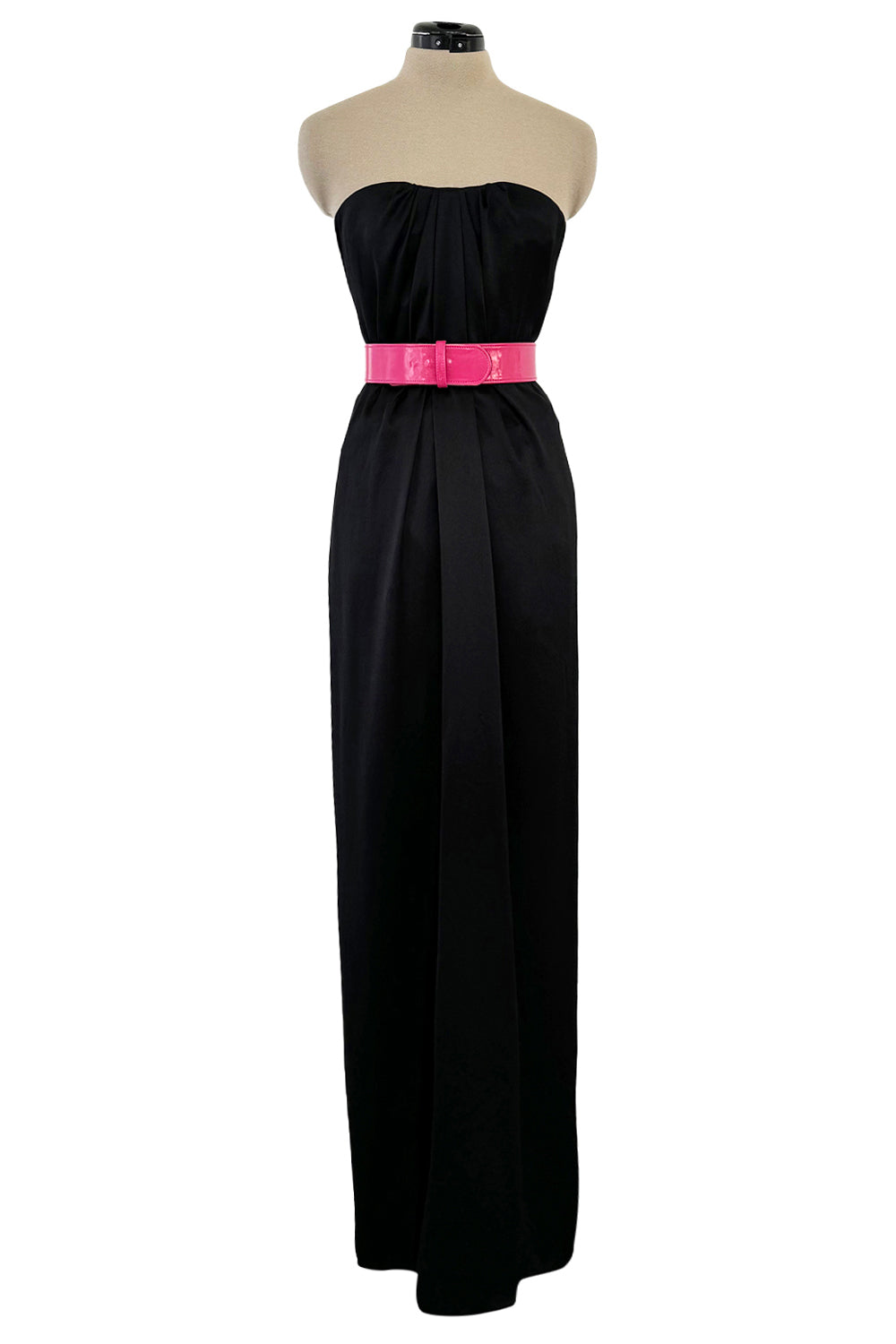
hot pink and black dress

hot pink and black dress Fabulous 2008 Alexander McQueen Strapless Black Silk Dress w Vibrant P – Shrimpton Couture

Sale price$21.71 Regular price$24.12
Save 10%

Pay in installments of $6.03 with ShopPay, AfterPay and Klarna

Shipping Estimate
USA
  • USA
  • CAN

Ships within 48 hours · Estimated delivery Aug 14 - Aug 19

Promo Codes Available:

For Your Every Summer RSVP, with Code: SUMMER15

Description

hot pink and black dress Fabulous 2008 Alexander McQueen Strapless Black Silk Dress w Vibrant P – Shrimpton CoutureThe spring 2008 collection was called 'La Dame Bleue' and was a tribute to his mentor and friend Isabella Blow who had committed suicide on May of 2007 after a long bout of illness. His statement of the show was this; 'Isabella flew. The collection is exuberant and excessive. It's about her way of thinking and that way of thinking brought light into fashion. Even when she was down she was up with what she wore. I had the best times with Isabella. I

The spring 2008 collection was called 'La Dame Bleue' and was a tribute to his mentor and friend Isabella Blow who had committed suicide on May of 2007 after a long bout of illness. His statement of the show was this; 'Isabella flew. The collection is exuberant and excessive. It's about her way of thinking and that way of thinking brought light into fashion. Even when she was down she was up with what she wore. I had the best times with Isabella. I remember going to Mauritius with her and I'd come back from scuba diving and it would be 100 degrees and she'd be standing on the beach head to toxin McQueen with a Philip Treacy Hat on. Or we'd be sitting around the pool and she'd still be head to toe in McQueen with a Philip Treacy hat on. I've though a lot about why she would wear things like that and she wore them because it made her feel like a diva. She was a diva in what she wore. She pulled it off. I never blinked at what she wore. It just seemed normal. So this was a collection about Isabella ad about wearing clothes that transform you." The entire show was a beautiful testament to someone he loved dearly. This dress is a version that combines the look of the one shoulder dresses in the same colour combination and the strapless butterfly dresses that were shown on the runway that season. It would have been one that was produced for the shops as an alternative to the runway piece.  This was the fifth last collection of his career and these last collections are considered to be some of his most brilliant. 

The dress is made from a black bias cut silk that drapes beautifully over the body. t is strapless with a built-in inner cupped bodice that gives you support and holds the dress in place. The cups are shaped for support and to hold the dress properly in place. The top of the bodice has a slight curve to add some softness and then the silk drapes over that. The dress glides over the inner structure and falls in column to the floor. The silk is gathered in towards the center of the front so it is full through the body. At the back it is cut to be fuller and create more volume. There are two opening at each side of the back and you can slip that bright pink patent belt through those which gives shape at the front and then the back has that gorgeous volume over the belt. You could also do the opposite so that the belt only shows at the back and the front has the fullness. The choice of that feather light silk for this one keeps it light and easy and as you move the silk billows around you. It also creates this incredible movement when you walk. The dress is original supermodel length and still has its original tags attached. It is spectacularly beautiful. Excellent condition with a minor note below 

Fully lined in a black bias cut silk and has a built in cupped corset. The inner corset closes with its own zipper and the dress zips to close over that with a hidden set zipper. The belt snaps to close and shows some minor wear on its edges as shown. Tagged a McQueen 44. The inner corset has some stretch. You could have the inner corset adjusted if you needed more or less room. Buttons on the inner bodice to add straps if you wanted. Has its original tags attached

Bust: to 18" flat across from side seam to side seam with a B-C cup
Inner corset waist: 16" flat across from side seam to side seam
Inner hips: to 24" flat across from side seam to side seam
Length: 55" from top of bodice to hem
Belt: snaps are set at 31", 32" and 33"

Modern Sizing Equivalent: MED-LRG

Item# DD4468

Reference Photos: (1-2) Spring 2008 Alexander McQueen Runway (Look 27 & 38).  /  (3) Thandie Newton at the 2008 Orange British Academy Film Awards.

All items are thoroughly checked over before shipping. Unless noted everything in our shop has been professionally cleaned. All sales are final. Overseas clients will be emailed to obtain agreement to our final sales policy before the order is shipped as per our return policy.

Shipping Notes
  • Free Standard Shipping on $100+ Orders to the USA.
  • Except Preorder products are shipped in 48 hours.
  • Delivery to the USA:
  1. Standard Shipping : 3-10 business days
  • If time is of the essence, please consider selecting expedited delivery for faster service.
Exchange/Return Notes
  • We offer a 30-day return/exchange service after receiving.
  • Final sale items are not eligible for returns or exchanges.
  • To process your return/exchange, please contact us at [email protected]
  • Please click here for more details>>> Return & Exchange Policy
SKU: 3232363731

Discover Niche Categories That Outsell hot pink and black dress

Top-Converting Item to Boost Your Average Order

4.6 ★★★★★
Based on 23 reviews
Sort
Highest Rating
Newest First
Oldest First
Product Reviews
N
Verified Purchase
Nancy C. Beck
Charlottesville, US
★★★★★ 5
Excellent resource
Format: Paperback
Two novel ideas ago, I had to put that one aside because I stuffed it to the point where the story made no sense. I intend to go back to it at some point, but for now, it's collecting dust. Also collecting dust is my more recent idea. I started with an outline (of sorts), wrote and rewrote it a few times...only to get stuck on Chapter 8 or so. I didn't know where to take the story. This one will probably never get resurrected...but you never know. Which leads me to one of the best things in this book: outlining with index cards. There's at least one other book touting this, but I'm sure there are others that do. What sets this one apart, in my mind, is his suggestions on how to set it up. This doesn't comprise a huge part of the book, but it made enough sense to me that I decided to give it a whirl. Almost 50,000 words later, I'm still chugging along, taking into mind his ideas (I'd never heard it put quite this way) about doorways of no return (more on that in a moment). Sure, I've made some changes, throwing out cards, rearranging cards, adding cards. That's the beauty of this system: it's not set in granite. If your muse takes you in a way that's different from what you originally wrote, go for it! Mr. Bell explains the doorways simply, at first, as transitions - from beginning to middle and then middle to ending. The first doorway gets your Main Character from beginning to middle; the idea is to create a scene where the MC is thrust into conflict in a way that keeps him/her there. With the second doorway (middle to ending), something has to happen to set up the final confrontation. It's usually a huge clue, a big piece of information, or a major crisis that sends the MC hurtling towards the conclusion. Mr. Bell explains these in greater detail, and I found his explanations quite understandable. But there's more to this book than that. Mr. Bell gets into how to come up with plot ideas, character arcs, revising, plot problems and cures, scenes, and tips and tools. I wasn't bothered by his reusing some of the same good writing examples, but it may make you cringe or roll your eyes. Other than that minor quibble, I think everything else about this book makes it shine as a writer's resource.
WAS THIS REVIEW HELPFUL?YesReportShare
Reviewed in the United States on December 1, 2006
C
Verified Purchase
Corwin
Natrona Heights, US
★★★★★ 5
Most Helpful Book I've Read on Plot and Structure
Format: Paperback
This is a well-organized, easy-to-read guide to techniques used to develop plots and sound story structure. It includes 14 chapters and two appendices. They cover such topics as what a plot is, how structure holds plot together, how to get ideas, and how to handle/interweave plot into all the levels of a novel (from whole sections such as the Beginning or middle of the work, down to the micro level of individual scenes). He includes discussion of different "plotting systems" (from writing by "the seat of your pants" to types/methods of creating outlines of various levels of "thoroughness" for those interested in mild outlining to someone with full-blown OCD). It discusses complex plots and sub plots, character arcs in relation to plot, common problems and solutions, revision, and more. Every chapter ends with a few exercises to reinforce the topic covered. The two appendices are a checklist for reminding you of major plot components as you write, and how to create "back cover" (aka the blurbs on the back of your book, or the summaries on the inside flap of dust jackets). As a writer, I am a "seat of the pants" guy, who's reluctantly recognized it isn't working for me (a major motivation for getting this book). Bell's discussion of different styles of outlining, though brief, gave me ideas of how to proceed. While I've often read books that include exercises, I confess to rarely doing them -- Bell is an exception (no, I didn't do *all* of them, but.... :) ). His text uses plenty of examples, drawn from movies and well-known novels. I've read other works on plot and structure (both general books and at least two dedicated to these topics), and have found this one to be by far the most readable, instructive, easy-to-digest, and *helpful.*
WAS THIS REVIEW HELPFUL?YesReportShare
Reviewed in the United States on June 17, 2017
C
Verified Purchase
Cora L. Foerstner
West Palm Beach, US
★★★★★ 5
I have a few instructional writing books I reread; this is one of them.
Format: Paperback
Plot & Structure: Techniques and Exercises for Crafting a Plot That Grips Readers from Start to Finish by James Scott Bell may be the best book for plotting and creating structure in fiction stories that I’ve read. I have a few instructional writing books I reread; this is one of them. Plot & Structure works for writers who don’t use outlines and for those who do. Throughout Bell acknowledges and addresses how his ideas about plot and structure can be used by all writers. This isn’t a “my way or the highway” kind of book. Bell gives practical advice for all writers. What’s so great about Plot & Structure? The biggest plus is Bell’s practical and down to earth strategies and clear explanations. Here are the other greats: Bell’s approach isn’t a how-to formula; it’s more of a guide. His genre is thrillers, but he addresses the needs of other genres as well as those of literary fiction. He provides many strategies writers can use to approach plot and structure; plus, he encourages readers to find their own way of working. The exercises at the end of the chapters are practical. If you try some of them, you’ll discover that they aren’t busywork but helpful approaches to solving writing issues. Unless you’re a pro with so many publications behind you that you don’t need help, this isn’t a book to read once and put away. It’s a book you’ll come back to and get more out of with a second or third reading. If you want a formula or step-by-step program, this isn’t a book for you. He gives choices so you can find you own style and way of working. Which is one of the things like I about the book. It’s like going to a writer buffet and choose the strategies that work for you. If you are someone who writes without an outline, you are going to be surprised because Bell doesn’t leave you out of any of the equations. He has strategies for all writers.
WAS THIS REVIEW HELPFUL?YesReportShare
Reviewed in the United States on November 13, 2014
M
Verified Purchase
Mel Bridges
Louisville, US
★★★★★ 5
Great advice, guidelines, and suggestions: Bell writes with a contagiously inspiring attitude
Format: Paperback
I admire good organization when it comes to most things, especially in a book that purports to teach about structure. The organization of the book makes it easy to go back and reread a part; for example, if you are working on a beginning, middle, or end section in your fictional story, there are corresponding chapters for what you need. Each chapter has ending exercises that I imagine to be helpful, but I haven't actually worked them through although I've read them. You will read about elements that you need to know to how to do to write an appealing story, like characterization, settings, dialogue, and scene selection. It is recommended that you get a book with these elements as the main focus for a more detailed, expansive treatment (if you haven't done so already). Bell is most helpful on how to construct a scene. However, he does not have much to say about description, other than that it has a tendency to slow the plot and you should give details as needed but not more than that (on the line of a need-to-know-type of basis). Bell also has sections on how to brainstorm plot ideas and test whether the ideas are worthy of attention. This was something I needed to do with my last story idea that burned and crashed. Furthermore he tells of "plotting systems" used by many writers, which are the-strict-only-by-the-outline group (OPs) or the free-rein-no-outline group (NOPs) and writers using a little of both. The suggestions and tips are conveyed in a way that you can take and adapt them to your style. The chapter on common plot problems was very helpful. He even tells of how he squeezes in his writing time. Bell's way doesn't work for me, but you can take it and suit it to your own circumstances. What I like about Bell is that he writes in a non-demeaning way to new writers. There are some writing books which take punches at new writers, be it ever so subtly or blatantly (I would rather not name any names), even though these books may contain invaluable writing advice and tools. It is just refreshing to have Bell's attitude. He motivates me to write and be true to myself, especially in his introduction. So far it is one of the books I keep going back and rereading parts that are pertinent to what I am writing.
WAS THIS REVIEW HELPFUL?YesReportShare
Reviewed in the United States on February 8, 2006
K
Verified Purchase
Ken Goldstein
Belleville, US
★★★★★ 5
As Much About Life As Writing
Format: Paperback
Anne Lamott is not a cheerleader, more like the Burgess Meredith with the water bottle and bucket in Rocky's corner between rounds -- I'm also guessing she wouldn't wilt if she had to slash your eye open if like Rocky it got sealed shut. She knows you are going to get hit hard, and she reminds you that you know it too. She tells you not to get distracted by that which doesn't matter to the process of writing. Much of this she learned from her father, who was also a career writer. He taught her it was the doing that mattered, not the surrounding mechanical functions that seem like they matter. What struck me repeatedly in Lamott's mini-lessons was her deep understanding of process -- that output of a work is not so much the full work itself, but an assembly of building blocks, one at a time, each a commitment, and only in totality something more. She does not advocate bonehead process or ridiculous formulaic mandate - this is not a how-to manual -- she just wants us to care about what we are doing and accomplish it in a series of heartfelt steps. There are no shortcuts, it's a little more each day, a continuum that adds up to a satisfying and cohesive whole. This is not breakthrough thinking, but it's a lesson we need to learn over and over, and it's not just about writing. Creative process is the heart of innovation. Think of all the elements that make the iPad great. If all the elements weren't great, it would not be great. Same with a restaurant menu and wine list. Same with an office skyscraper or memorial monument. Same with a short story, same with a novel. Summary impression rests in the details, all the many tiny parts or moments -- and all those details require hard thought and careful design. Lamott is smart about this, she tells you that getting it right is not going to happen out of the gate and unnerving strides at perfection can be your worst enemy. She has an excellent descriptor for the real quality of the first drafts to which we aspire. I'll let you discover that on your own so the word does not get scraped here. Her point is, just get the words out, work on making them better later, a layer at a time. She also allows us not to obsess unnecessarily with locking the full road map before we explore, because again that can impede our work. How far do we need to see ahead? "About two or three feet ahead of you" is plenty she tell us, quoting E.L. Doctorow: "..writing a novel is like driving a car at night. You can only see as far as your headlights, but you can make the whole trip that way." She says this is "right up there with the best advice about writing, or life, I have ever heard." I tend to agree. There is tremendous empathy in Lamott's world view, she offers a sense of shared experience that is reinforcing and comforting. Lamott talks about the imaginary radio station playing in your head -- another colorful descriptor I will let you discover -- that tells us over and over again why we can't do something, why the work we are doing is neither good nor worth doing. Learning to turn off that radio is our key to moving forward, we all hear it from time to time, but when it becomes perpetual, that is when our ability to create interesting work stops completely. Lamott is just so honest and clear about all the factors that stop us from moving forward because she not only has experienced them, she continues to experience them. She does not position herself as a guru or weekend seminar success evangelist, but simply as someone who can reflect on problems of creativity because she deals with problems of creativity endlessly in her own life. She is even more honest in telling us that no one can make these problems go away once and for all, certainly not with any form of temporal success. All we can do is know that these obstructions will always be there, so we must embrace confronting them. Sometimes it really is good to know that none of us are experiencing roadblocks on our own, the fact that someone like Lamott tells you she is experiencing what you are experiencing is precisely the empathy that builds strength and resistance because the experiences are shared, bad and good. Her humility is reinforcing and refreshing and uncompromisingly inspiring. "Bird by Bird" is not a long book, it can be read if you wish initially in a single sitting, but it is the kind of book you will find yourself coming back to for this chapter or that, this phrase or that. Lamott writes with good humor, even when she tackles very difficult and personal matters of her own life and those around her. The more I think about her framework, the more I am convinced it is much more broadly applicable then perhaps she even considered. I see the guidance as useful in company life, in financial life, in family life, in political life, and in government life. All of these require effective process to get them right, there are no shortcuts, and the rewards can be the smallest where the challenges are the greatest. That does not mean the rewards aren't meaningful, but it is the context of those rewards and the expectations that one sets for success that truly inform us when we are steering toward a final draft. Review excerpted from my blog: [...]
WAS THIS REVIEW HELPFUL?YesReportShare
Reviewed in the United States on October 3, 2011

recommand products